Quick Introduction:
If you have opened a kitchen drawer lately and found three dead phone chargers, a phone with a cracked screen from 2021, and a router nobody remembers unplugging, you already know the problem. The UAE is one of the most digitally connected countries in the region, and that convenience comes with a side effect nobody talks about enough: a growing pile of electronic waste that most households and offices genuinely don’t know what to do with.
E-waste is now one of the fastest-growing waste streams in the country. New phones launch every year, businesses refresh their laptops and servers on tight cycles, and smart home devices multiply in every villa and apartment. Most of this equipment still works, technically, but it gets swapped out anyway, and far too much of it ends up in a cupboard, a storage room, or worse, the regular trash.
Throwing electronics in regular bins is not just wasteful, it’s risky. Old hard drives carry personal photos, banking details, and business files. Batteries inside laptops and phones contain materials that can ignite if crushed in a garbage truck. Circuit boards leach heavy metals into soil and groundwater when they end up in landfill. None of this is dramatic, but all of it is preventable.
This guide walks through exactly how to recycle electronics in the UAE safely, what counts as e-waste, why it matters for your data and your health, and how to choose a recycler that actually does what it claims. Whether you’re clearing out a home office or decommissioning a data center, you’ll leave this article knowing what to do next.
What Is Electronic Waste?
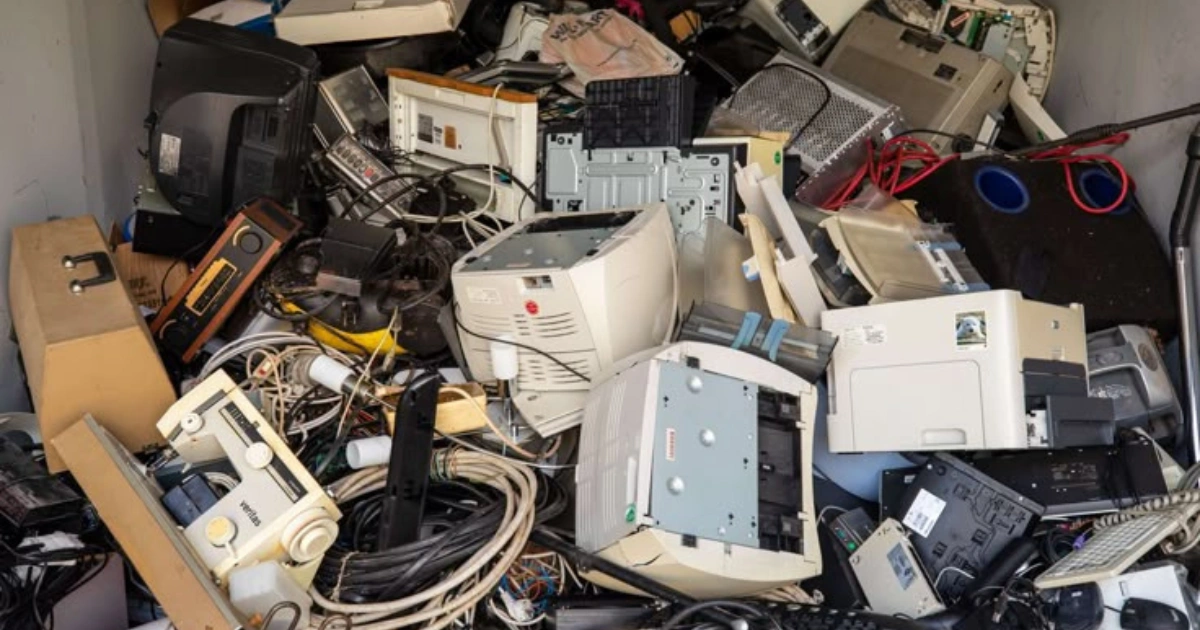
Electronic waste, or e-waste, refers to any device that runs on electricity or batteries and has reached the end of its useful life, whether because it’s broken, outdated, or simply replaced by something newer. It’s a broader category than most people assume.
Household Electronics
• Old smartphones, tablets, and laptops
• TVs, monitors, and gaming consoles
• Kitchen appliances like microwaves and blenders
• Chargers, cables, and remote controls
• Smart home devices and routers
Office Electronics
• Desktop computers and laptops
• Printers, scanners, and copiers
• Monitors, keyboards, and docking stations
• Phone systems and networking gear
Industrial and IT Infrastructure
• Servers and data center racks
• UPS units and power systems
• Network switches and routers at scale
• Cooling systems tied to server rooms
If it has a circuit board, a battery, or a power cord, it almost certainly qualifies as e-waste once it’s no longer in use.
Why Electronic Waste Is Growing So Fast in the UAE
A few forces are pushing e-waste volumes up year after year, and none of them are slowing down.
• Rapid technology upgrades: New phone and laptop models arrive constantly, and trade-in culture means older devices get retired faster than ever.
• Business expansion: Dubai and Abu Dhabi’s growing business hubs mean more offices opening, relocating, or scaling up, each transition generating outgoing IT equipment.
• Smart device adoption: Smart homes, wearables, and IoT devices add new categories of e-waste that didn’t exist a decade ago.
• Corporate IT refresh cycles: Many companies replace laptops and servers every three to five years as standard policy, regardless of whether the hardware still functions.
• Consumer behavior: It’s simply easier to buy new than repair, and warranties often expire right when a repair would make sense.
None of this is inherently bad. The problem isn’t that people upgrade, it’s that what happens to the old device afterward is rarely thought through.
Recycle Your Electronics the Safe & Responsible Way
Have old laptops, desktops, servers, printers, mobile phones, or other electronic devices you no longer use? We provide secure, environmentally responsible e-waste recycling services across the UAE with certified data destruction and sustainable disposal practices.
Contact our team today for a free consultation or schedule an e-waste collection for your home or business.
Contact Us
Why You Should Never Throw Electronics in Regular Trash
It’s tempting to toss a dead phone or an old keyboard in with the household rubbish. It feels harmless. It isn’t.
• Toxic materials: Circuit boards, batteries, and screens contain lead, mercury, cadmium, and other substances that are hazardous once released from their casing.
• Soil contamination: When e-waste sits in landfill, these materials gradually leach into the surrounding soil.
• Water contamination: Heavy metals can travel from soil into groundwater, affecting water sources well beyond the original dump site.
• Fire risk: Lithium-ion batteries in phones, laptops, and power banks can ignite or explode when crushed or punctured inside a garbage truck or compactor.
• Health concerns: Workers handling waste informally, without protective equipment, face direct exposure to these toxic materials.
None of these risks are exaggerated. They’re the reason most environmental authorities worldwide now treat e-waste as a separate, regulated category rather than ordinary trash.
Benefits of Recycling Electronics
Done properly, e-waste recycling solves more problems than just clutter.
Environmental Benefits
Recycling keeps toxic materials out of landfill and reduces the need to mine new raw materials, which lowers the overall environmental footprint of electronics manufacturing.
Economic Benefits
Retired IT equipment often still has resale or component value. Businesses that work with a proper asset recovery process can recoup some value from hardware that would otherwise just be a cost to dispose of.
Data Security
A certified recycling process includes proper data destruction, which closes the loop on a risk that simply throwing a device away never addresses.
Resource Recovery and the Circular Economy
Electronics contain recoverable metals, including copper, aluminum, and small amounts of precious metals. Recovering these materials and feeding them back into manufacturing is the foundation of a circular economy, rather than a one-way extract-use-discard model.
Corporate Sustainability and Compliance
For businesses, documented and responsible e-waste disposal supports sustainability reporting and reduces the operational and reputational risk that comes with informal, unregulated disposal.
Electronics That Can Be Recycled
Most electronic devices can be recycled in some form. Here’s a practical breakdown of common categories:
• Computing devices: laptops, desktop computers, tablets
• Servers and data center hardware: rack servers, blade servers, storage arrays
• Mobile devices: mobile phones and smartphones
• Office equipment: printers, scanners, copiers
• Networking gear: routers and switches
Storage media: hard drives and SSDs (these require secure destruction, not just disposal)
• Power equipment: UPS units and power supplies
• Cables and accessories: cables, keyboards, mice, and adapters
• Displays: monitors and TVs
One Important Note:
Batteries need separate handling from the rest of the device. Lithium-ion and other battery types should never be processed the same way as the casing or circuit board around them, since they carry their own fire and chemical risks. A recycler should always ask about, and separate, batteries before processing the rest of the unit.
Step-by-Step Guide: How to Recycle Electronics Safely in the UAE
Here’s the practical sequence to follow, whether you’re clearing one laptop or an entire office floor.
- Back Up Your Data: Before anything else touches your device, copy anything you need, photos, documents, contacts, to a new device, an external drive, or cloud storage. Once a device is handed off for recycling, you shouldn’t expect to get that data back.
- Factory Reset the Device: Run a factory reset on phones, tablets, and laptops. This clears app data, accounts, and saved credentials. It’s a good first layer of protection, though on its own it is not the same as certified data destruction, which is covered in more detail below.
- Plan for Hard Drive Destruction: For computers, laptops, and especially business servers, a factory reset alone isn’t enough if the device ever held sensitive data. Hard drives should be wiped using certified data erasure software or physically destroyed through shredding.
- Remove SIM Cards and Memory Cards: Take out SIM cards, microSD cards, and any other removable storage before handing over a phone or tablet. These are easy to forget and easy to lose track of once the device leaves your hands.
- Separate Batteries Where Possible: If a battery is removable, take it out and keep it separate. If it’s built in, let your recycler know so it gets handled with the correct safety process.
- Find a Certified Recycler: This is the step that actually determines whether everything above matters. A certified e-waste recycler will have a documented process for collection, data destruction, and environmentally sound processing.
- Schedule a Pickup: For more than a handful of devices, especially for offices, schools, or data centers, a scheduled pickup is far more practical than trying to drop off equipment yourself.
- Confirm Responsible Processing: Once your equipment is collected, ask for confirmation of how it was processed, particularly for any device that held data.
Data Security Before Recycling: What You Actually Need to Know
Data security is, for many people and almost all businesses, the single biggest hesitation around recycling electronics. It’s a reasonable concern, and it deserves a direct answer rather than a vague reassurance.
• Data wiping: Software-based erasure overwrites existing data so it cannot be recovered using standard recovery tools.
• Certified destruction: For drives that need to be physically destroyed rather than wiped, this means shredding the drive itself, not just deleting files.
• Physical shredding: Hard drives and SSDs are mechanically destroyed to the point where data recovery is no longer feasible.
• Business compliance: Companies handling client data, financial records, or health information have an obligation to ensure that data doesn’t leave the building intact on a retired device.
• Privacy protection: For individuals, this is about more than embarrassment, old devices can hold banking apps, saved passwords, and personal photos that you’d never want a stranger to access.
If a recycler can’t clearly explain how they handle data destruction, that’s a sign to ask more questions before handing anything over.
Business Electronics Recycling: Offices, Data Centers, Schools, and Hospitals
Businesses and institutions face a different scale of the same problem, and the stakes are higher.
• Office upgrades: Replacing desktops, monitors, and printers across a floor or building generates volume that needs a coordinated collection plan, not piecemeal disposal.
• Data centers: Decommissioned servers and storage arrays almost always contain sensitive data and require certified destruction as a non-negotiable step.
• Schools: Computer labs cycle through hardware regularly, and old devices may still hold student records or staff information.
• Hospitals: Medical and administrative systems often store patient data on retired equipment, making certified destruction a compliance matter as much as a security one.
• Government organizations: Public sector equipment frequently involves sensitive records that require documented chain-of-custody handling from pickup to destruction.
For all of these, certified recycling matters because it produces something a regular waste collector can’t: a paper trail. Certificates of data destruction and recycling give facility managers and compliance teams the documentation they need if anyone ever asks what happened to retired equipment.
How E-Waste Recycling Helps Individuals and Businesses Across the UAE
At E-Waste Recycling, the process is built around the same steps outlined above, just handled at scale and with documentation at every stage. The company works with businesses, government entities, and households across Dubai, Abu Dhabi, Sharjah, and the other emirates.
✔ We show up when we say we will. No vague “someone will call you,” we confirm a slot and stick to it.
✔ Pricing and process is explained, not just stated. You’ll know exactly what happens at each stage of collection and processing.
✔ Data security is handled properly. Not treated as an afterthought tacked onto the invoice.
✔ Paperwork is ready at handover. Manifest, chain of custody, and destruction certificates where applicable.
A Quick Note on Quantities
This kind of service is generally set up for bulk volumes, think office clear-outs, data center decommissioning, or school and hospital IT refreshes, rather than single-item pickups. If you’re an individual with just one or two old devices, it’s worth checking with the recycler first about minimum volumes, or looking at local drop-off points for smaller quantities.
For offices, IT departments, and facility managers dealing with a genuine volume of retired equipment, this is exactly the kind of structured process that turns e-waste disposal from a recurring headache into a routine, documented part of asset lifecycle management.
Common Mistakes People Make When Disposing of Electronics
A few habits show up again and again, and each one is worth correcting.
• Throwing electronics in regular bins: Even small items like chargers and old phones don’t belong in household trash.
• Selling devices without deleting data: A factory reset is a starting point, not a guarantee, particularly for devices that once held financial or business information.
• Ignoring batteries: Tossing batteries in with general e-waste, rather than separating them, creates avoidable fire risk during transport and processing.
• Using unauthorized recyclers: Informal scrap collectors may not handle data destruction or hazardous materials correctly, even if they offer to take equipment for free.
• Hoarding old electronics indefinitely: Storing dead devices in a cupboard “just in case” doesn’t solve the problem, it just delays it while the equipment becomes harder to recycle as components degrade.
Frequently Asked Questions
Q1. Where can I recycle electronics in the UAE?
You can recycle electronics through certified e-waste recyclers that serve your emirate, many of which offer pickup services for businesses and bulk quantities across Dubai, Abu Dhabi, Sharjah, and the wider UAE.
Q2. Is it illegal to throw electronics in regular trash in the UAE?
E-waste is treated as a regulated waste category rather than ordinary household trash, and environmental authorities across the UAE encourage proper disposal through approved channels rather than general bins. Always check current local regulations for your specific emirate, as rules can vary.
Q3. Can I recycle my old phone for free?
Many recyclers and trade-in programs accept old phones, and some retailers offer trade-in credit. For bulk quantities, business and household clients should check directly with their chosen recycler about pricing or pickup terms, since some recyclers focus on larger volumes rather than single devices.
Q4. What happens to my data when I recycle a laptop or computer?
A proper recycling process includes either certified data wiping or physical destruction of the hard drive, depending on the device and your preference. This should happen before the device is broken down for material recovery.
Q5. Do I need to remove the battery before recycling a laptop?
If the battery is removable, yes, take it out and keep it separate. If it’s built into the device, inform your recycler so they can handle it with the correct safety process.
Conclusions
Electronic waste in the UAE isn’t going to slow down, new devices, business growth, and smart technology all but guarantee that. What can change is how that waste gets handled. Backing up data, resetting devices, separating batteries, and choosing a certified recycler turns a vague sense of “I should probably deal with this” into a simple, repeatable process.
Whether you’re a homeowner finally clearing out a drawer of dead chargers, a facility manager decommissioning a data center, or a school replacing a computer lab, the steps are the same in principle: protect your data, separate what needs separate handling, and hand the rest to someone who can show you exactly what happens next.
Recycle Your Electronics the Safe & Responsible Way
Have old laptops, desktops, servers, printers, mobile phones, or other electronic devices you no longer use? We provide secure, environmentally responsible e-waste recycling services across the UAE with certified data destruction and sustainable disposal practices.
Contact our team today for a free consultation or schedule an e-waste collection for your home or business.
Contact Us