IT Asset Remarketing
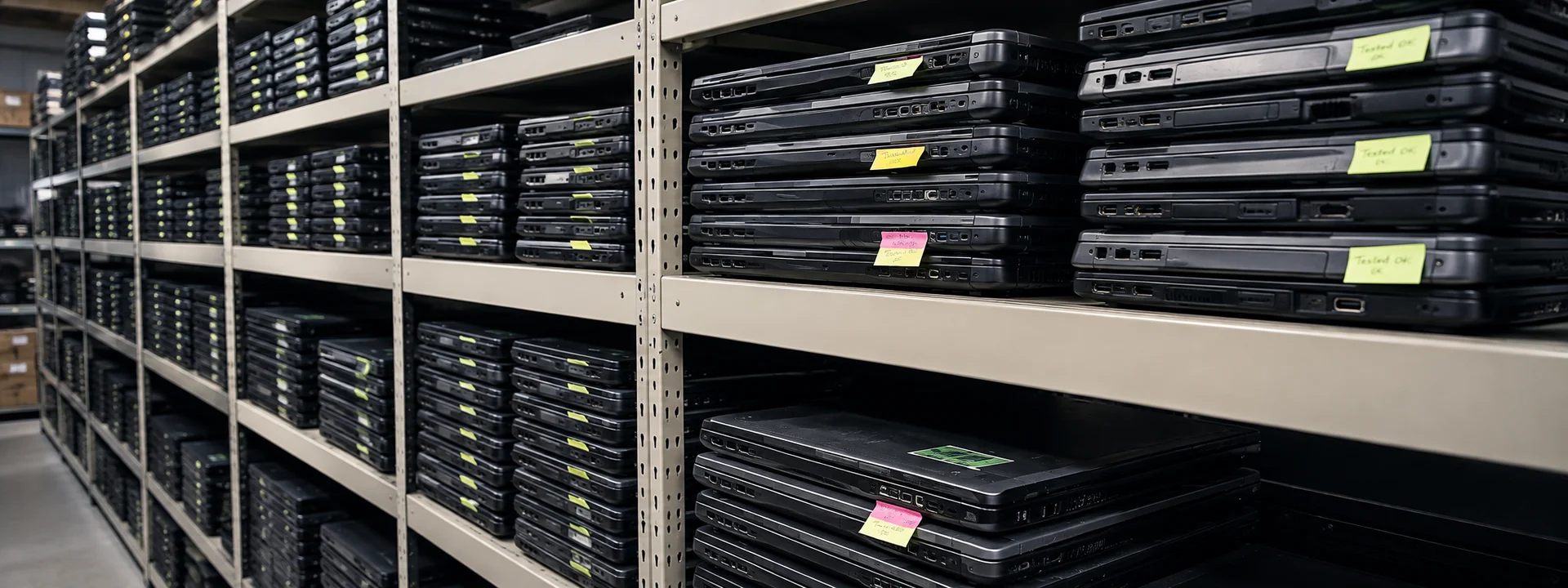
Retired servers, laptops and networking hardware sitting in a store room aren't automatically waste. Depending on age, configuration and condition, they may still carry resale, component or reuse value and IT asset remarketing is how that's worked out before anything is scrapped, donated or destroyed.
Every device is assessed, tested and graded first. Data-bearing units are sanitised or destroyed before anything moves toward resale. What doesn't qualify for resale still goes to component or material recovery, not straight to a skip.
- Assessed and tested before pricing not a flat rate per box
- Data-bearing devices sanitised or destroyed before resale
- Own yard in Industrial Area 6, Sharjah not a broker
- Collection arranged across all seven emirates
What IT Asset Remarketing Means for a UAE Business
IT asset remarketing is the process of identifying which parts of a retired IT inventory still have resale, reuse or component value, then moving that equipment back into circulation instead of sending everything straight into a recycling stream.
It sits between two things businesses often confuse. Ordinary IT scrap disposal treats equipment as material weight copper, steel, aluminium priced against commodity rates regardless of whether a unit still works. Remarketing starts from a different question: does this device, or a component inside it, still have a buyer? A three-year-old rack server with current processors, or a batch of managed switches still under vendor support, is typically worth several times its scrap weight once tested and sold on.
IT asset disposition (ITAD) is the wider governance layer around all of this tracking each asset from collection through data handling to its final outcome. Remarketing is usually the highest-value branch inside that process, not a separate service running alongside it.
Which IT Equipment Can Be Considered for Remarketing?
Not every retired device is a remarketing candidate, and it's the assessment that decides the route not an assumption based on category. Equipment commonly considered includes:
Servers & Storage
Rack, tower and blade servers, storage arrays, disk shelves and complete data-room hardware.
Desktops, Laptops & Workstations
Office desktops, laptops, thin clients and workstations from refreshes or relocations.
Networking Equipment
Managed switches, routers and firewalls see the network equipment buying page for value factors specific to this category.
Drives & Storage Media
Enterprise SSDs, hard drives and tape, where sanitisation and resale is the appropriate route.
UPS & Infrastructure
UPS units and selected data-centre infrastructure, assessed individually rather than as a category.
Monitors, Printers & Components
Displays and office peripherals, plus loose memory, processors, caddies and power supplies.
A single laptop with a cracked hinge and an intact three-year-old server rarely follow the same route. Age, working condition and completeness are assessed per unit or per lot not assumed from the category alone.
How the Remarketing Process Works
Seven steps, in order. Equipment can exit the process at step 4 if it doesn't test well, which is normal the process is built to route each unit correctly, not to force resale.
Asset Review
An equipment list, photographs or an asset register is reviewed to understand quantity, age and general condition before anything is collected.
Inventory & Identification
Each unit or lot is logged against make, model and serial number, so nothing is assessed blind once it arrives.
Data Security Assessment
Storage-bearing devices are flagged and separated, and a sanitisation or destruction method is agreed before testing begins.
Testing & Grading
Units are powered on, function-tested and graded working, faulty or non-functional the result that sets the realistic route.
Value Assessment
Grade, configuration, completeness and current secondary-market demand are weighed to reach a valuation, not a flat per-unit rate.
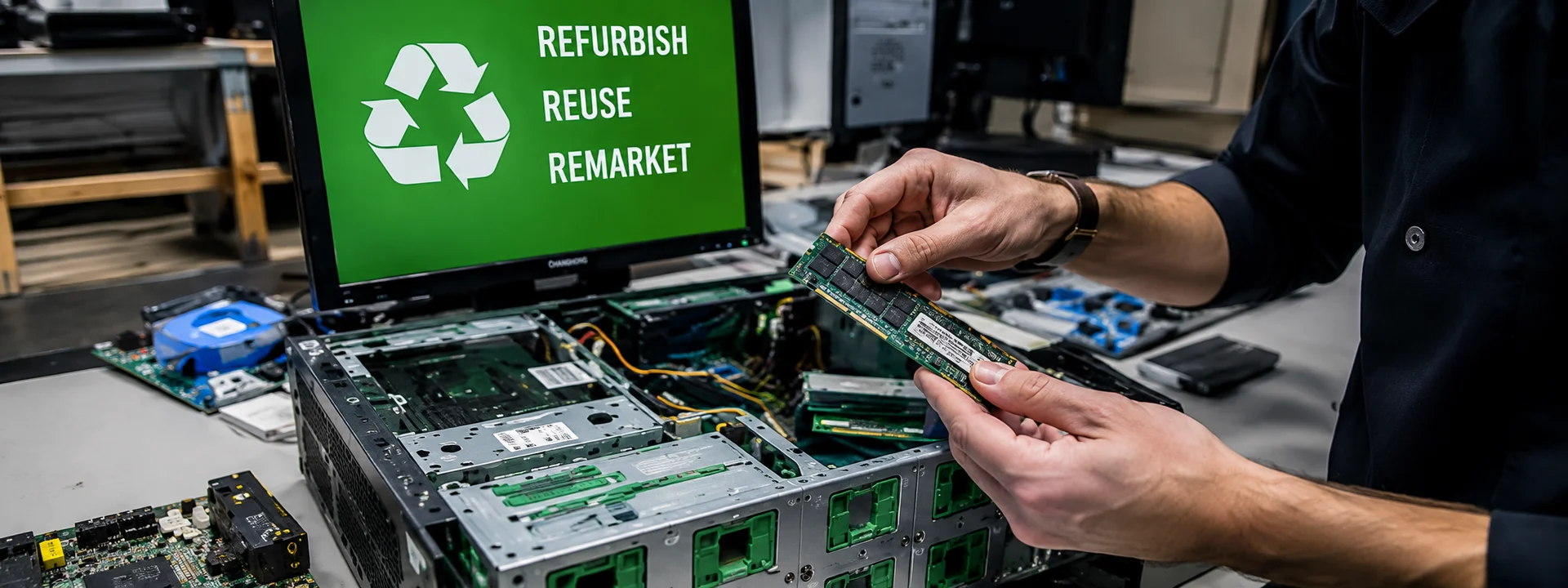
Remarketing, Reuse or Refurbishment
Units with resale potential are prepared cleaned, repaired where it makes sense, and moved toward resale or redeployment.
Responsible Recycling of Non-Recoverable Equipment
What can't be reused or resold is routed to material recovery, so nothing is simply left aside once it fails testing.
How We Determine the Potential Value of IT Equipment
Two identical-looking servers can be priced very differently once opened up, which is why remarketing value is never a flat figure per box. Factors that influence it include:
- Make, model and how recently the platform was in mainstream production
- Specification processors, memory, storage and installed components
- Working condition after testing, not condition as described beforehand
- Completeness original drives, caddies, rails and accessories affect resale readiness
- Cosmetic condition, particularly for laptops and displays
- Quantity and consistency across a lot a uniform batch is easier to place than mixed odd units
- Current demand in the secondary IT hardware market, which moves over time
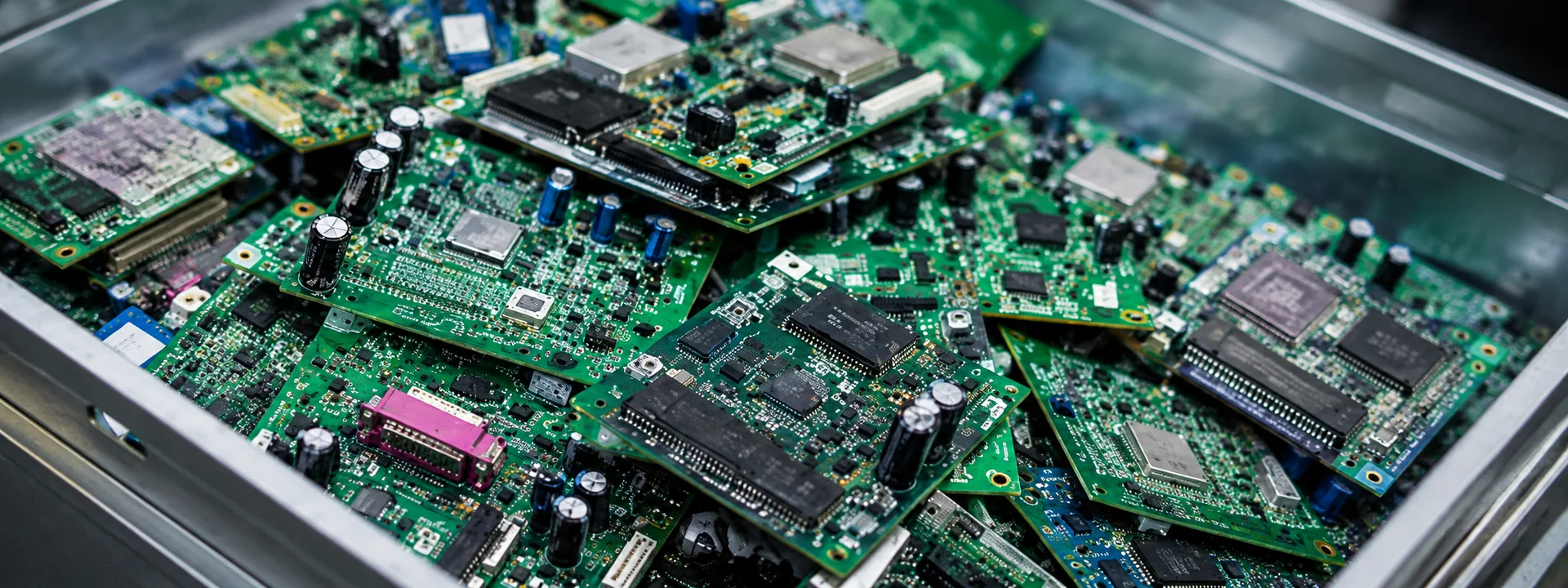
Where a full system has no buyer, the components inside it processors, memory, drives, power supplies are frequently still saleable individually. We don't promise a fixed or "highest market" price upfront; a written valuation follows assessment, not the other way round.
Outright purchase or consignment
Outright Purchase
Payment is settled upfront at an agreed figure once assessment and testing are complete, with no further involvement required from your side.
Consignment
Equipment is moved through to sale over an agreed period, with proceeds reported and shared once units sell usually a better fit for larger, higher-value lots.
Data Security Comes Before Remarketing
Handing over retired equipment for resale is not the same as handing over an empty box. Servers, laptops, storage arrays and some networking devices carry data-bearing components, and that data has to be dealt with before anything is tested let alone offered for resale.
Deleting files or reformatting a drive does not count as verified sanitisation; both remove the pointer to the data, not the data itself. A defensible process treats every drive as though it holds live information until confirmed otherwise, uses a method suited to the media type, and records what was done against each serial number.
Where software erasure isn't appropriate failed drives, encrypted media, or equipment governed by a stricter internal policy physical destruction, arranged through secure IT disposal , is the more suitable route, even if that specific unit could otherwise have gone to resale.

What Happens When Equipment Cannot Be Resold?
Not every retired asset clears testing, and that's a normal outcome rather than a failure of the process. When a unit doesn't qualify for resale, the next question is whether it holds component value working parts salvaged from a dead chassis are often worth recovering even when the whole system isn't.
What's left after that goes to material recovery: metals, plastics and other recoverable streams processed through responsible e-waste recycling rather than landfill or informal handling. The hierarchy runs reuse, then refurbishment, then component recovery, then material recycling remarketing and recycling work as one connected process, not two services competing for the same equipment.
IT Asset Remarketing for Bulk Business Equipment
Remarketing is most useful at volume, since that's when consistent grading and testing pays off. Common triggers include an office relocation or upgrade clearing several years of hardware at once, a data-centre refresh replacing a server generation, a branch or site closure, and equipment simply reaching the end of a standard replacement cycle.
Bulk lots are assessed as a lot as well as unit by unit forty identical desktops from one refresh are usually easier to place in the secondary market than the same forty machines arriving as mismatched singles from different departments. For businesses managing this on a recurring basis rather than a one-off clearout, a corporate recycling arrangement can fix the process instead of restarting it each time.
Why Businesses Choose IT Asset Remarketing
Residual value comes back to the business instead of to whoever hauls equipment away
Functional hardware gets a second working life instead of being recycled prematurely
Store rooms and data-room floor space are freed up on a fixed timeline
Non-resalable equipment still has a documented, responsible route rather than an ad-hoc one
A clearer paper trail exists if a lease return, audit or free zone query asks where equipment went
No requirement for equipment to be new or complete only an honest assessment of what's there
IT Asset Remarketing vs Traditional IT Scrap
The two routes are often confused because the same truck can collect for either one. The difference is what happens after collection.
| Traditional IT Scrap | IT Asset Remarketing | |
|---|---|---|
| Basis of value | Material weight copper, steel, aluminium | Function, configuration and secondary-market demand |
| Typical condition | Non-functional or genuinely end-of-life | Working, or economically repairable |
| Value ceiling | Commodity / material rates | Often several times material value once resold |
| Before pricing | Weighing and sorting | Testing, grading, data sanitisation |
| Best suited to | Cable, dead units, mixed odd stock | Recent servers, laptops, supported network gear |
In practice, a single collection often runs both routes at once which is why scrap valuation and remarketing are assessed side by side, not chosen in advance.
UAE-Wide Coverage
Collection is arranged across Dubai, Abu Dhabi, Sharjah, Ajman, Ras Al Khaimah, Fujairah and Umm Al Quwain, including free zone sites where prior notice or a gate pass is usually required. Multi-site businesses a head office in one emirate and a warehouse or branch in another can run assessment and collection under one process rather than separate arrangements per location.
Not sure which route covers your site? The nearest collection guide explains how routes are grouped and what notice each one needs.
Frequently Asked Questions
What is IT asset remarketing?
Which IT equipment can be remarketed?
How is the value of old IT equipment determined?
Can servers and networking equipment be remarketed?
What happens to data before equipment is resold?
What happens to equipment that has no resale value?
Do you collect bulk IT equipment across the UAE?
Send Your Retired IT Equipment List
What the equipment is, roughly how many units, where it's located, and whether it works. An asset register or a few photographs covers all of it we come back with a written assessment of what can realistically be remarketed, refurbished or recycled, and what that's likely to be worth.